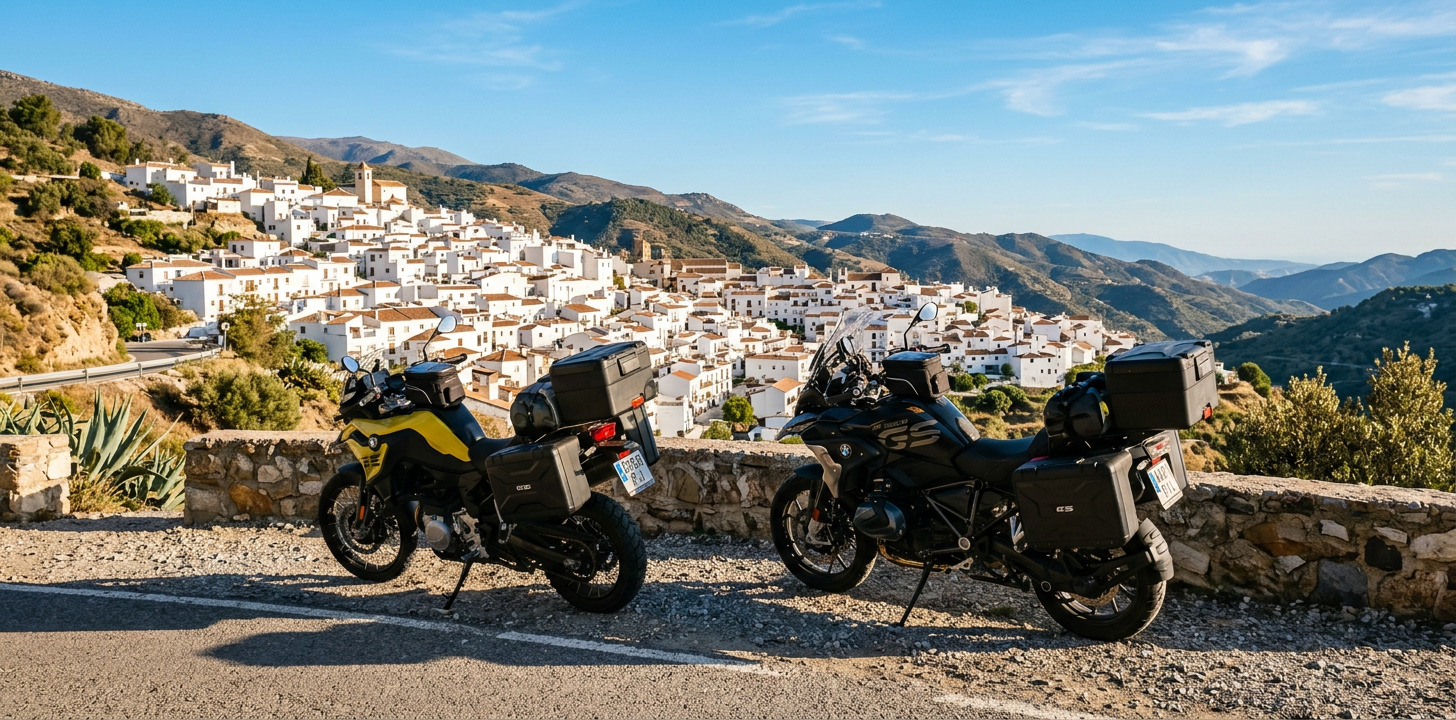
Riding a Motorcycle in Spain: The Rules Visiting Riders Need to Know
Spain is one of the best countries in Europe for motorcycle touring, and the rules are mostly what you would expect at home. A few are different, though, and some changed in October 2026. Here is what visiting riders need to know before they set off, from licences and speed limits to the new rules on gloves and footwear.
Your licence and documents
- EU licences are valid in Spain.
- UK photocard licences are valid for visitors, and you do not need an International Driving Permit. If you still have a paper licence, update it before you travel. See our guide to travelling to Spain from the UK.
- Other licences: the Spanish authorities recommend carrying an International Driving Permit together with your national licence.
- Carry your licence and passport while riding. If you rent, the bike’s papers and insurance documents come with it.
Helmets, gloves and footwear
- Helmets are compulsory for rider and passenger on every road. They must be an approved type, to the ECE 22 standard.
- Gloves: from 1 October 2026, protective gloves are compulsory for rider and passenger outside built-up areas. The fine is €200.
- Footwear: closed shoes are required. Sandals and flip-flops are out; proper riding boots are best.
- Lights: ride with dipped headlights or daytime running lights on at all times.
- Reflective vest: carry one and put it on if you stop at the roadside after a breakdown or accident.
Speed limits for motorcycles
| Road | Limit |
|---|---|
| Towns, roads with one lane each way | 30 km/h |
| Towns, roads with two or more lanes each way | 50 km/h |
| Ordinary roads outside towns | 90 km/h |
| Autovías and autopistas (motorways) | 120 km/h |
Lower limits are signposted on many mountain roads, and speed cameras are common, including average-speed sections. Limits are in km/h, so set your bike’s display to match.
Alcohol limits
The limit is 0.5 g/l in the blood (0.25 mg/l in breath) for most riders, and 0.3 g/l (0.15 mg/l in breath) for riders who have held their licence for less than two years and for professional drivers. Police run random breath tests, and penalties over the limit can be severe. The simple rule on tour: save the wine for the evening.
Filtering and riding in traffic
Filtering between lanes of moving traffic is not allowed in Spain. Under the 2026 rule changes, riders may use the hard shoulder in slow or stopped traffic where signs allow it, at no more than 30 km/h and giving way to cyclists and pedestrians. In practice, a good self-guided route keeps you off busy roads anyway: our routes use mountain and country roads and never a motorway.
Phones, intercoms and navigation
Using a hand-held phone while riding is banned, and so are earphones. Mount your phone or GPS on the handlebars and set the route before you ride. On our tours, your bike comes with a phone mount and your digital route guide with daily GPS routes.
Fines
Visitors without a Spanish address are usually asked to pay a fine on the spot. Most fines are reduced by 50% if you pay promptly, so ask the officer about the reduced amount. The fines for the new glove and footwear rules are €200.
Ride Spain the easy way
Our self-guided tours include your BMW GS, insurance, high-end hotels and GPS routes on the best roads, with support while you ride. Tours from Barcelona, Bilbao and Málaga, from €635.
See the toursTips for riding Spain’s mountain roads
- Expect tight hairpins on mountain passes, often with gravel on the inside of the bend.
- Watch for livestock in the Pyrenees, the Picos de Europa and the Sierra Nevada, where cows and goats graze by the road.
- Plan your fuel in empty regions like the Maestrazgo and inland Andalucía, where stations are far apart.
- Avoid the midday heat in summer in the south, and start early. Our guide to the best time to ride in Spain goes through the year month by month.
FAQ
Do I need an International Driving Permit to ride in Spain?
Not with an EU or UK photocard licence. Riders with other licences are advised to carry an International Driving Permit with their national licence.
Are motorcycle gloves compulsory in Spain?
Yes. From 1 October 2026, protective gloves are compulsory for rider and passenger outside built-up areas, with a €200 fine.
Can motorcycles filter in Spain?
No, filtering between moving lanes is not allowed. Riders may use the hard shoulder in slow traffic where signs allow it, at up to 30 km/h.
What is the speed limit for motorcycles in Spain?
90 km/h on ordinary roads outside towns, 120 km/h on motorways and 30 or 50 km/h in towns, unless signs show otherwise.
Plan your ride
Read our safety tips for motorcycle touring, the packing guide and the riding gear we recommend, or tell us what you want to ride.
Rules can change. Check the latest guidance from the DGT, Spain’s traffic authority, before you travel.